

No Nerds, No Words
On theory vs. practice and why no amount of AI-generated infographics will make you good at your job.

A brief note to my readers: Starting with this issue, More Than Words has a paid tier. Abundant gratitude to those who have already subscribed. If this work has been useful to you, becoming a paying subscriber is the best way to support it. Free subscribers always get the full essay.
Last month, I met with the learning and development lead for a national professional association. After I shared a bit about Internal Calms™, she nodded politely and said something to the effect of:
“Well, that sounds interesting. But our members are experts in their craft and very discerning. They’re going to want more than just theory. They want something they can take away and implement on Tuesday.”
To which I said, “Of course.”
But to which I also say: Bullshit.
There’s no shortage of people who can tell you eleventy things for your Tuesday. I have the screenshots dating back to every webinar since 2011 to prove it. Not to mention endless and aimless notes on my phone intended to inspire fiscal year strategies that never materialized.
And thanks to AI, there will never be a shortage.
In fact, we’re oversaturated.
We are swimming in strategies and tactics.
But are we concerned with understanding why they work?
And will we make time to implement them?
In this issue:
You Can’t Build What You Don’t Understand
An Interesting Stat About Training
You Can’t Survive and Grow at the Same Time
You Can’t Build What You Don’t Understand
I’m a plane nut. Specifically: I’m a plane crash nut, which is why my list of all-time favorite reads includes Flying Blind, The Checklist Manifesto, and — if you’re feeling romantic — Sky Daddy.
My idea of a fun Friday night is a Phony Negroni, cozy sweats, and bingeing Mayday — or if we’re really living, an episode from the second season of Nathan Fielder’s The Rehearsal.
A show about plane crashes and communication? Stop. I’m blushing.
I read Flying Blind after first coming across Moe Tkacik’s excellent book review for American Prospect.
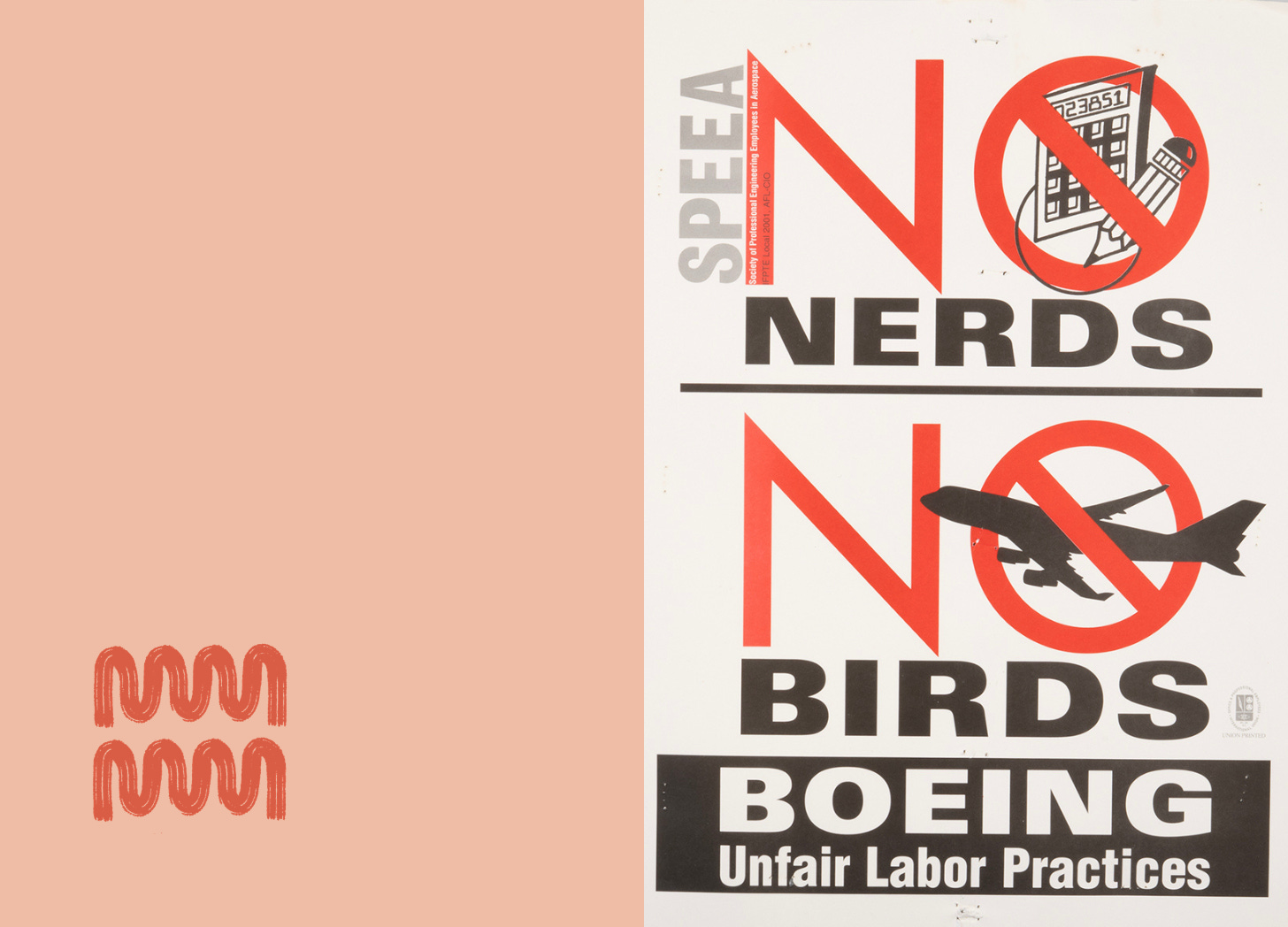
Apart from charting Boeing’s descent from the standard-bearer of American manufacturing to the kind of company that allows a 737 MAX 8 to crash — a parable for late-stage capitalism if there ever was one — Flying Blind introduced me to my favorite slogan of all time: “No Nerds, No Birds.”
Echoed by over 17,000 Boeing engineers who walked off the job in 2000 — the largest white-collar strike in U.S. history — the words fill me with awe every time I read them.
Staring down management decisions that “emphasized financial results rather than engineering excellence“ as well as benefit cuts and flat pay, the engineers took their knowledge and walked out of the hangar.
They went on strike for the right to use their brains.
I find this a particularly noble effort in an age where we see six-figure storytelling roles at the same time technical writers are training their AI replacements before being laid off.
Some IC pros look at those six-figure storytelling roles and feel, finally, that they have a real job.
I look to those six-figure storytelling roles and see Narrative Paradigm Theory. I see the research that consistently shows people tend to remember stories more than abstract data.
Just like how I see Media Richness Theory in channel strategies. And I see Self-Determination Theory in employee ambassador and influencer programs.
I see these, because I’ve devoted time to learning communications theory and applying it to my practice so I can understand why certain things work while others don’t.
Just like the Boeing engineers knew you couldn’t outsource your way to a safer plane, we can’t shortcut our way to knowing what we’re actually doing — or why it matters.
The Urgency Trap
In May 2025, three ridiculous things happened in this order:
A friend I deeply respect told a room full of communicators that AI was coming for our jobs. Adapt or perish. End of story. I disagreed out loud and stewed about it for days.
I read “An Interview with the Herald of the Apocalypse“ aka former OpenAI researcher Daniel Kokotajlo, in which he predicted unchecked AI development could result in superintelligence and widespread human obsolescence by 2027 (note: this summary was written by Google AI, as I cannot bring myself to go back and even look at this article). I went from feeling pissed to doing a 24/7 impression of The Scream.
I coped by asking Perplexity to build me a six-month editorial calendar guaranteed to grow my LinkedIn following. Never mind that AI was going to ruin my second career the way technology had already ruined my first one in journalism. AI came back with a few recommendations: Post three to five times per week. And end every post with “One thing to try next week.” Turns out AI made this recommendation to, well, everyone.
I thought back to this while reflecting on a term I learned earlier this year at PRSA’s Northwest Communicators Conference. Speaker Salomé Chimuku introduced Tema Okun’s white supremacy culture during a talk on embedding multicultural community engagement into strategic communications.
I emphatically urge every communicator to explore Okun’s website, but in particular I’ll highlight Okun’s section on “sense of urgency,” which she defines as a continued pressure that makes it difficult to think long-term, consider consequences, or learn from mistakes — and that actively works against inclusive, democratic decision-making.
The antidote, she writes, is to slow down: realize that “rushing decisions takes more time in the long run because inevitably people who didn’t get a chance to voice their thoughts and feelings will at best resent and at worst undermine the decision because they were left unheard.” (Anyone else thinking of AI sabotage?)
Okun pairs urgency with “either/or thinking” — the impulse to simplify complex issues into binary choices under pressure, with no time or encouragement to consider alternatives. The antidote there is the same: slow it down, give people breathing room, avoid making decisions under extreme pressure.
This is all in the context of white supremacy, but I find it helpful to also locate these within what Feminist Business School founder and scholar Jennifer Armbrust calls “supremacy culture” — a broader set of systems that reinforce and locate power through hierarchical belief systems that shape “our convictions about what is normal, natural, and inevitable.”
When supremacy culture demands urgency and either/or thinking, and you add AI, what do you get?
A LinkedIn feed filled with comms pros fighting like hell for the relevance of their jobs, each with AI-generated infographics and one thing for you to try on Tuesday.
We’re fighting the wrong fight to use our brains.
An Interesting Stat About Training
Pit this against Axios HQ’s 2026 State of Workplace Communication, which surveyed 475 leaders and 814 knowledge workers across the US.
The headline finding is what leapt out at me:
Organizations that invested in both communication tools and training were nearly 40 percentage points more likely to see growth in revenue, market share, retention, and engagement than those that invested in neither.
The report is also explicit about what separates high-performing organizations from everyone else this year: 52% of high-performers significantly increased their investment in structured communication training, compared to 9% of low-performers.
Axios’s study understandably spends a lot of time digging into data on the topic we can’t avoid: AI. But where it really gets interesting is in the discussion around AI adoption blockers. Axios notes: “Part of the confusion and friction leaders are feeling is from a lopsided investment.”
“Budget for a platform or tool — like AI — and you change what’s possible. Budget for training — to understand its potential and how to do it well — and you change what people actually do.”
Let’s come back to the word structured: What does this look like? Forty-five minute webinars? Bite-sized e-learning modules? One thing to implement this week?
I’m guessing not. There’s a difference between training people to use a tool and taking the time to train people to understand why it works — and what’s going on when it doesn’t.
One is a tip. The other is transformative.
You Can’t Survive and Grow at the Same Time
In her latest book Feminist Flourishing Framework, Armbrust writes: “You cannot survive and flourish at the same time. They are two fundamentally different — and incompatible — ways of being.”
The systems shaping how we work, she argues, persist by creating unsafe and unpredictable conditions — keeping us in survival mode is how they maintain their hold.
Maybe it’s my age, maybe it’s my distance from corporate, but I read this quote and I think about “One thing to try on Tuesday.”
What are we all doing on LinkedIn but trying to flourish in survival mode?
I see my fellow practitioners posting their way through polycrisis. Through the fear of job loss. Through the fear of job replacement. Through the fear of not being liked because the algorithm has hijacked our dopamine to keep us locked in on the platform.
I see us all working through the fear of whatever is on the other side of tomorrow.
Urgency and either/or thinking are hallmarks of survival mode. And you cannot learn — really learn, the kind that changes how you think — while you’re in it. You can consume. You can screenshot. You can add things to a Tuesday list.
But you cannot build understanding from inside a panic spiral.
I built The STEADY Work because I wanted a space where we respect theory while honing our practice. Where we come together in collective understanding of the urgency of this moment — and then deliberately choose to leave urgency at the door.
Where communicators take a breath long enough to consider what they actually believe about this work. Where either/or thinking gives way to something more expansive. Where we ask not just what we’re going to do on Tuesday, but what we’re building toward, period.
And where people leave not just with a plan, but with the knowledge to get people on board with it.
Where we can be nerds together.
My first STEADY Work cohort starts July 13. Learn more.

Currently
Building: A proper marketing engine. If you want to stay informed on all things Equilibrious Communications, sign up for my mailing list.
Enjoying: In-person events. I just returned from ALI’s AI for Strategic Communications Conference in San Francisco. Presenting my Anchor workshop live was the highlight of a year filled with them.
Listening: Finally had a chance to wrap up listening to Frank Dias on the Future of Internal Communication podcast. I have tremendous respect for Frank’s thinking on AI implementation. In particular: I like the way he is squaring his own usage with concerns about his footprint. Also, If Books Could Kill did a thoughtful episode on The Body Keeps the Score and I hope a lot of people listen to it.
Reading: It’s been a minute since I last shared what I’m reading, and now I can’t remember everything I read. Highlights: Neuroscience of Organizational Change. All killer, no filler. Wrapping up Accessible Communications. Every IC director should read this and share it with their teams. Also finishing The Canary Code (and same). Lastly: Pretty much everything Jennifer Armbrust has written. I am massively inspired. For fun: Hope in the Dark (odd to read this so far removed from its publication, but it holds up, and I’m grateful for the perspective). Strangers: A Memoir of Marriage (a must after my dear friend and mentor Patti Cocciolo recommended it and I read the excerpt in Vanity Fair). In preparation for my workshops: The Art of Gathering and New Rules Next Week. On deck: I’m thinking bell hooks and Jenny Odell.
Watching: Quit Shrinking. No thank you. Revisiting The Good Place (slowly) with my partner. We’ll switch over to The Bear for its final season shortly.
Wondering: How best to organize a nervous system retreat for women communicators to co-regulate on the Oregon Coast.

This was such a grounding reminder to slow down and start spending time really digging into all those learning tabs I have saved! Thank you <3 also love hearing all you're reading and excited about!